
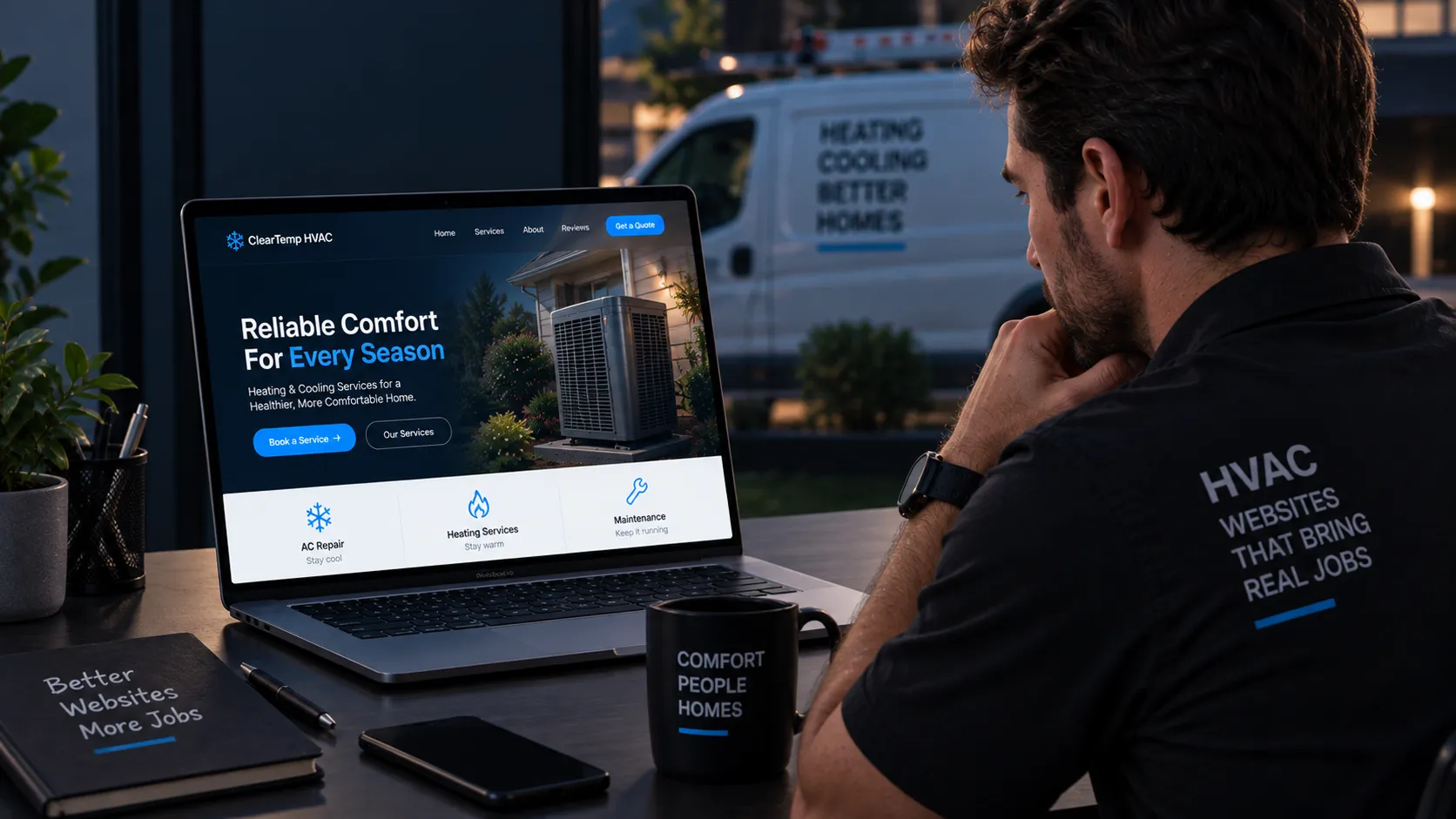
How We’d Turn an HVAC Website Into a Stronger Lead-Generation Asset
An HVAC website can look professional and still make it difficult for homeowners to find the right service, trust the company, or take the next step. Our web design approach focuses on clearer service journeys, stronger trust signals, and more conversion opportunities from existing traffic.
ABOUT THE HVAC BUSINESS
About the HVAC Company
For this strategy, we’re looking at an established residential HVAC contractor with an active website, steady traffic, and a strong local reputation.
The website is functional, but key information is difficult to find, important services are buried, and calls to action are not consistently placed around homeowner intent.
The problem is not simply how the website looks.
The problem is whether the site helps more visitors confidently move from searching for help to requesting service.
The company provides:
- AC Repair
- HVAC Replacement
- Furnace repair
- Heat pump services
- HVAC Maintenance
- Emergency HVAC service
- Indoor air quality services
CAN HOMEOWNERS FIND THE RIGHT SERVICE IN A FEW SECONDS?
The Challenge
Traffic Is Reaching the Website. Too Much of It Is Leaving.
The company may already be getting traffic from SEO, PPC, Maps, referrals, and direct visits, but the website is not consistently turning that attention into calls and service requests.
Unclear Service Journeys
Visitors may land on the homepage without a clear path to AC repair, replacement, heating, maintenance, or emergency service.
Weak Calls to Action
Phone numbers, request-service buttons, and forms may be inconsistent, difficult to find, or placed too far from the moment a homeowner is ready to act.
Limited Trust at Decision Points
Reviews, licenses, financing, technician credibility, warranties, service-area proof, and real company details may not appear where homeowners need reassurance.
Mobile Conversion Friction
Slow pages, crowded layouts, long forms, poor spacing, or difficult navigation can create unnecessary friction for homeowners searching from a phone.
Getting Website Traffic but Not Enough Calls or Service Requests?
Our Approach
The Strategy: 90 Days, Three Priorities
We’d use the first 90 days to understand how homeowners currently use the website, simplify the highest-value service journeys, and strengthen conversion opportunities throughout the site.
-
01
Days 1–30:
Audit & Map
Review page structure, navigation, service coverage, mobile experience, page speed, calls to action, forms, trust signals, analytics, and traffic entry points. We’ll identify where homeowners are dropping off, which pages carry the most business value, and where the existing experience creates unnecessary friction.
Outcome: A prioritized website roadmap showing which pages, journeys, and conversion points should be improved first.
-
02
Days 31–60:
Redesign & Simplify
Restructure priority pages around real homeowner intent. Make services easier to find, strengthen calls to action, improve mobile navigation, simplify forms, clarify service areas, and place reviews, credentials, financing, warranties, and company proof closer to decision points.
Outcome: A clearer website experience that helps homeowners move from landing on the site to finding the right service and taking action.
-
03
Days 61–90:
Optimize & Strengthen
Use visitor behavior, conversion data, call activity, form performance, and page engagement to refine the experience. Improve underperforming pages, reduce remaining friction, strengthen internal journeys, and expand high-performing design patterns across the rest of the site.
Outcome: A more conversion-focused website designed to support SEO, PPC, local search, and direct traffic more effectively.
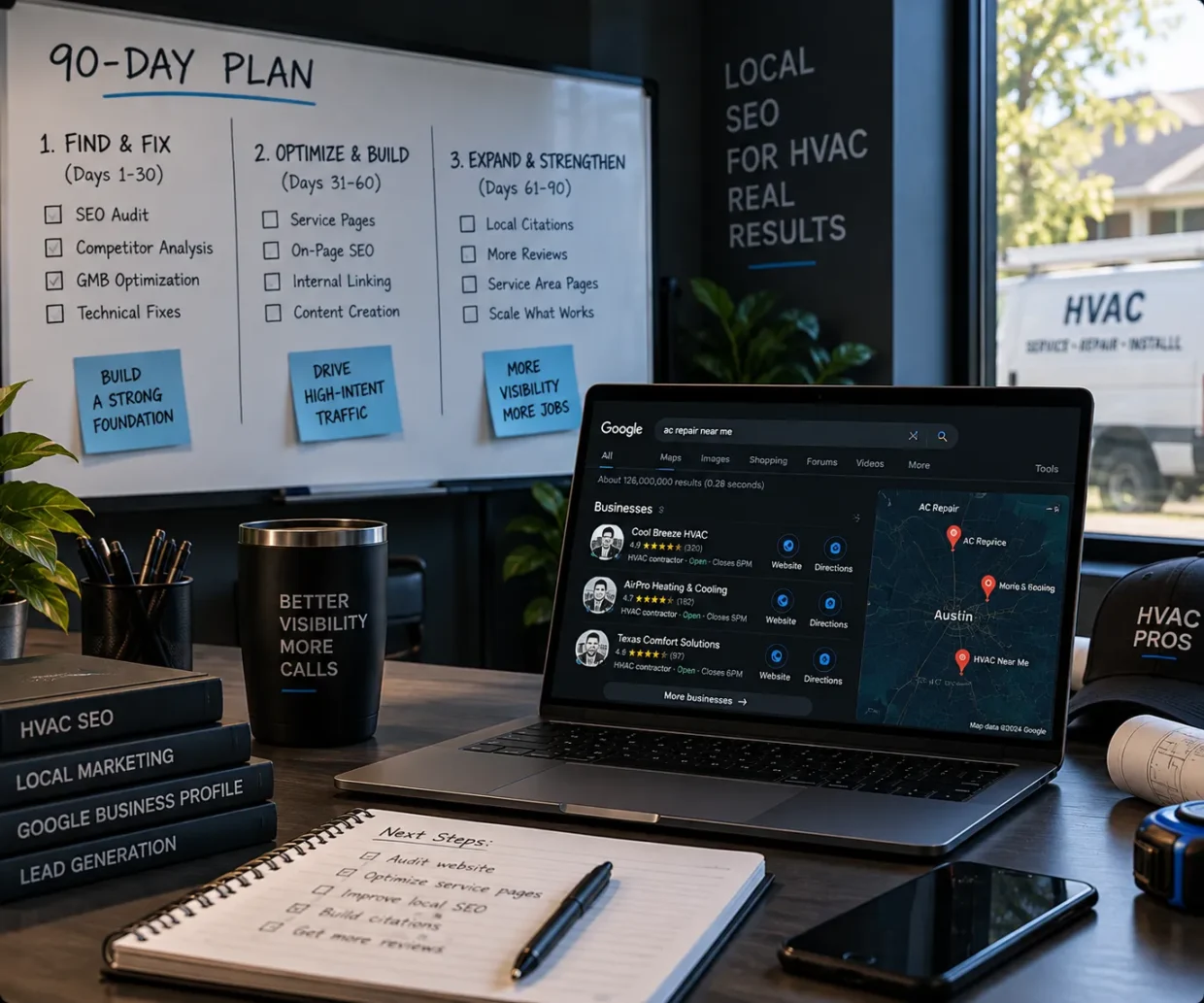
DOES YOUR WEBSITE MAKE IT EASY TO CALL, BOOK, OR REQUEST SERVICE?
90 Days to Build a Clearer Path From Visit to Service Request.
RESULTS AT A GLANCE
Website Growth Focus
The goal is not simply to redesign the website. It is to make the existing traffic more useful by helping more homeowners find the right information, trust the company, and take action.
More Call Opportunities
Make phone and service-request actions easy to find throughout the website.
Stronger Service Journeys
Guide homeowners directly to the HVAC service they need without unnecessary navigation.
Better Local Trust
Use reviews, credentials, service-area information, financing, warranties, and real company proof more effectively.
Less Conversion Friction
Reduce unnecessary steps between landing on the website and requesting service.
The goal is to turn more existing website traffic into homeowners taking the next step.
Is Your Website Making It Too Hard to Become a Customer?
We’ll show you where visibility, rankings, and qualified lead opportunities are being lost.
EXPLORE MORE HVAC STRATEGIES
More HVAC Growth Stories
See how other marketing channels can work alongside a stronger website to improve visibility, demand generation, and lead quality.

HVAC Google Ads Restructure
How We’d Restructure an HVAC Google Ads Campaign to Reduce Wasted Spend and Generate More Qualified Calls
An HVAC Google Ads account losing budget to irrelevant searches, out-of-area leads, weak campaign structure, and conversion tracking that treats every call as equally valuable.
Multi-Service-Area Local SEO
How We’d Improve Local Search Visibility for an HVAC Contractor Across Multiple Service Areas
An HVAC contractor visible near its main office but struggling to build consistent Maps and local search visibility across the other service areas it wants to grow.
90-Day SEO Growth Plan
How We’d Build a 90-Day SEO Growth Plan for an HVAC Contractor
An HVAC contractor struggling with weak service visibility, limited local relevance, technical SEO gaps, and stronger competitors across important service searches.
FAQs
HVAC Web Design Questions That Matter Before Hiring an Agency
What makes an HVAC website effective?
An effective HVAC website should make it easy for homeowners to understand what services are offered, where the company operates, why it can be trusted, and how to call or request service. Design should support those actions rather than distract from them.
Should every HVAC service have its own page?
Priority services usually benefit from dedicated pages because repair, replacement, maintenance, heating, cooling, and other services involve different homeowner needs and search intent. Each page should provide useful information and a clear next step.
How important is mobile design for an HVAC website?
Very important. Many homeowners search for HVAC help from a phone, particularly during urgent repair situations. Navigation, phone buttons, forms, page speed, and service information should all work cleanly on smaller screens.
Does a website redesign improve SEO automatically?
No. A redesign can support SEO when technical structure, content, internal linking, page speed, service coverage, and search intent are considered properly. A visually attractive redesign alone does not guarantee stronger search visibility.
How many calls to action should an HVAC page have?
There is no fixed number. Calls to action should appear naturally around moments where a homeowner may be ready to act, without making the page feel repetitive or aggressive.
Should an HVAC website show pricing?
That depends on the service and business model. When fixed pricing is not practical, the website can still explain financing, estimates, service fees, value factors, or what homeowners should expect before scheduling.
How do you measure HVAC website performance?
Depending on available tracking, performance can include calls, forms, service requests, conversion rate, engagement, mobile behavior, landing-page performance, page speed, and how effectively different traffic sources turn into business opportunities.

Ready to Turn More Website Visitors Into HVAC Opportunities?
See where your current website creates friction, which service journeys need improvement, and where stronger trust and calls to action can help more visitors take the next step.
We’ll review your website structure, service pages, mobile experience, calls to action, trust signals, and conversion paths to identify where the biggest opportunities exist.
No redesign for redesign’s sake. Just a clearer website built around how homeowners actually find, evaluate, and contact an HVAC company.